
This is a private guided tour report by Japan Guide Agency (JGA Inc.), a network of 1,000+ government-licensed, English-speaking local guides across all 47 prefectures of Japan.
Tour Itinerary
- 10:00 Tour start @Hotel & Spa Hida Takayama
- 10:25 Hie Shrine
- 11:00 Takayama Jinya
- 12:10 Strolling around Nakabashi Bridge and Kami-Sannomachi
- 12:20 Yamazakura Shrine
- 12:30 Lunch @Mandai Kadomise
- 13:30 Hida Kokubunji Temple
- 14:00 From Shimo-Ninomachi to Sakurayama Hachimangu Shrine
- 14:40 From strolling along Enako River to the Higashiyama Walking Trail (Unryuji Temple, Daioji Temple, Sogenji Temple, Hokkeji Temple)
- 15:15 From Enako River (Koyanagibashi Bridge) via Ebizaka Slope
- 15:30 Tasting at Futaki Shuzo Brewery
- 15:50 Strolling around Kami-Sannomachi
- 16:00 Tour end @Kami-Sannomachi
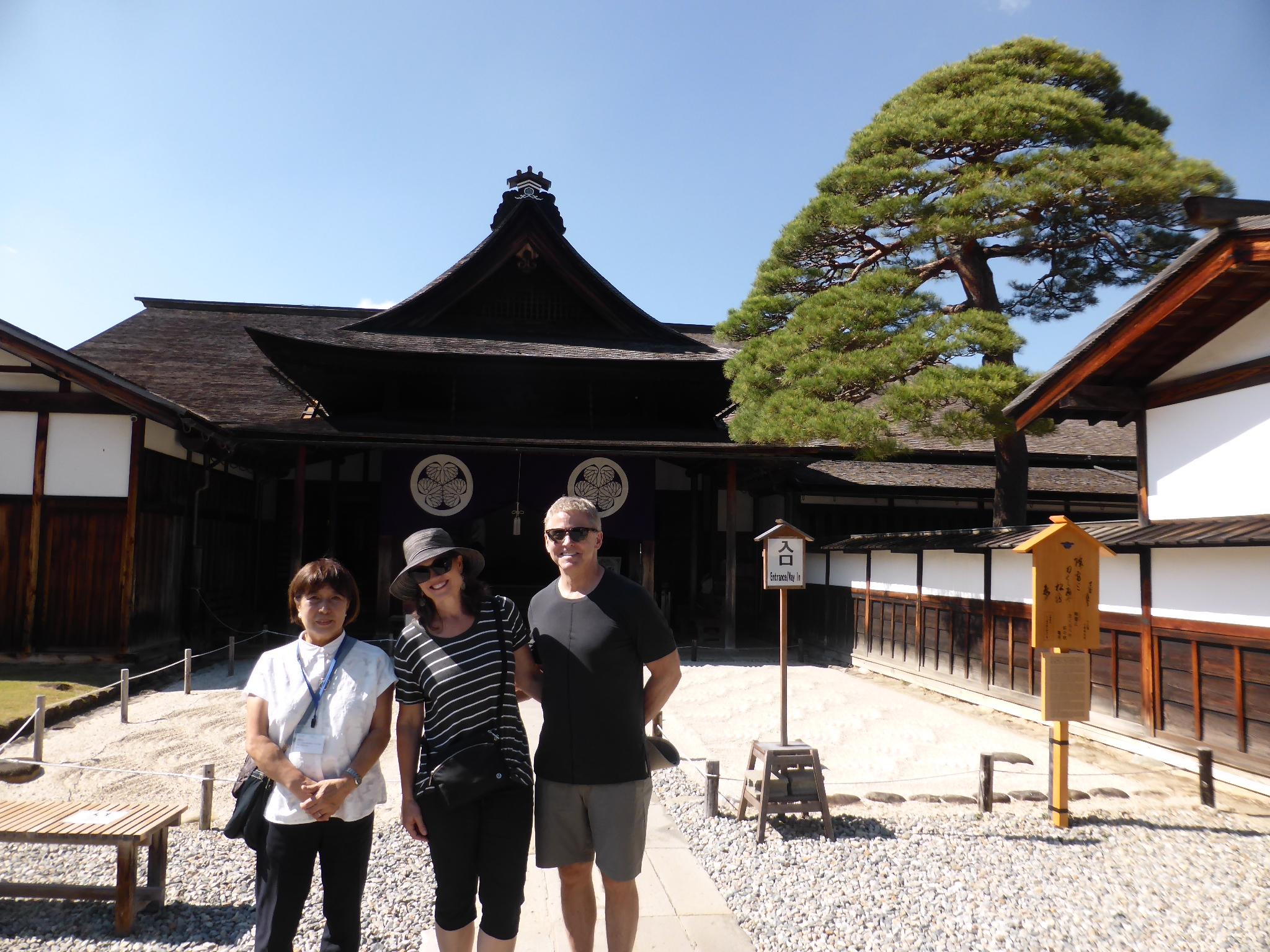
What Is a Private Walking Tour of Takayama's Old Town Like? A Licensed Guide's Report
I guided a group visiting from North America. For lunch, the guests expressed a strong wish to try local food, so I suggested a Japanese-style restaurant, where they chose the hoba miso set meal. They had a longstanding interest in plants, and at the end of the tour they were delighted to find a potted hoba tree in Kami-Sannomachi.
In advance, the guests had sent a request: "We are really into culture, food and beautiful environments. The beauty of old Japan is what we want to see and experience." So I proposed two possible courses, and we strolled along the one they selected. As we walked, we talked about the places we would visit next and shared what each of us had discovered and thought, making the tour lively and enjoyable.
At Hie Shrine, when a discussion arose about whether the guardian deity was male or female, one of the guests firmly said, "A deity is of no gender. After all, it is a deity." That was a memorable moment. The guests seemed to enjoy this kind of tour, filled with constant conversation.
Both guests took special interest in the shape of the shrine building's roof at Hie Shrine, in the roofing method of layered wooden shingles at the Jinya, and in the white paint on the eaves during our walk through the streets. They were also fascinated by stone lanterns and paper lanterns, enjoying Japanese culture.
At the Jinya, they showed interest in its role and in the lives of the townspeople, carefully viewing each exhibit. They asked many questions, and I was able to guide them while enjoying our conversation. Even after spending plenty of time looking around, they still seemed to want to see more. Afterward, we continued our walk while shifting the central topics to the town planning that emphasized the defense of Takayama Castle, the flood-control works related to the Miyagawa River, the demolition of Takayama Castle, and the town's subsequent prosperity.
At Hida Kokubunji Temple, they greatly admired the large ginkgo tree, said to be 1,250 years old; at Sakurayama Hachimangu Shrine, the autumn leaves just beginning to change color; and along the Higashiyama Walking Trail, the quiet environment and the lush, beautiful scenery of cedars and cypresses. On the slope descending from Soramachi, where samurai residences once stood near Hokkeji Temple, down to Ichinomachi, I was able to offer a meaningful walk that conveyed the difference in status between samurai and townspeople and the rise and fall that followed, providing a fine conclusion in keeping with the theme. A tasting at the Niki Sake Brewery added a nice final touch to the tour.
Click here for more details: Takayama Local Food & Sake Culture Tour, Licensed Guide

Hi! I really welcome you to Japan. My name is Reeko KOSHIMA. People in Japan usually call someone’s name with his(her) family name – like “Koshima -San”. But I’m afraid it’s too long for the guests from overseas. So, I suggest you just call me “Rei”. It sounds like “ray” of “X-ray” or “ray, a drop of golden sun.” It’s from the famous lyric of “Do-Re-Mi,” the Sound of Music. So, just call me “Rei.”
Well, I must say I’m so happy to have this opportunity to guide you. Japan is full of interesting places to visit; castles, temples, shrines, other historical places, Japanese gardens, nice view of seas, lakes, fields, mountains, and more and more. How do you like visiting these attractive places with me.
Or do you rather prefer exploring town? Eating, shopping, taking buses or trains will be also fun. Japan has lots of good restaurants and almost every district has its own special food. We call it “Gotouchi Gurume” in Japanese. Buying some from street stalls or shops and eating while walking – it’ll be also a good experience to try that local food, I think.
Now, let me plan for your tour. Where would you like to visit? What would you like to see? What would you like to eat? What kind of things would you like to buy? And would you like to spend the day? If you let me know some of your idea, the plan will be closer to the satisfying one.
I hope this tour will be the best memory of you in Japan.