Morioka Customized Half-Day Tour — Guide Toshi
April, 2026
This is a private guided tour report by Japan Guide Agency (JGA Inc.), a network of 1,000+ government-licensed, English-speaking local guides across all 47 prefectures of Japan.
Tour Itinerary
- 13:40 Arrive at JR Morioka Station. Guide them to the food section of Fezan inside the station building, and to the restaurant area. Without using any stairs at all, transfer elevators three times as a porter to guide them to the hotel where they will stay in front of the station. ⇒14:00 Arrive at Hotel Morioka Ekimae. After check-in, the guests move to their room to put down their luggage. (Since the wife seemed a little tired, we decided to let them rest for about an hour.) ⇒14:55 Reassemble in the hotel lobby and head by taxi to the first destination, the "Asabiraki Brewery." Along the way, explain the stone walls of Morioka Castle Ruins Park and the history of Morioka Castle inside the taxi. It becomes a bit of a detour, but ask the driver to change the route slightly. ⇒15:15 After arriving at the "Asabiraki Brewery," enjoy a factory tour and sake tasting. ⇒16:20 Arrive at Morioka Hachimangu Shrine ⇒16:40 Arrive at Suzuki Morihisa Workshop ⇒16:45 Arrive at Nakatsugawa Bridge ⇒16:50 Arrive at Iwate Bank Red Brick Building ⇒16:50 Arrive at Morioka History and Culture Museum ⇒16:55 Arrive at Morioka Castle Ruins Park ⇒17:20 Arrive at Sakurayama Shrine ⇒17:50 Arrive at Hotel Morioka Ekimae. Tour ends
Title: What Is a Private Sake Brewery and Castle Tour in Morioka Like? A Licensed Guide's Report
Around 13:40, I met the guests, who arrived by Shinkansen from Sendai, at the Shinkansen ticket gate. The Shinkansen ticket gates were said to have two entrances, a south and a north gate, but when I actually did an advance check, I found that there is now only one. Since I had told them we would meet at the north gate, I sent an update via a messaging app. I was able to meet the guests without trouble, though one of them arrived at the gate a little later than the other and seemed rather tired. For the Welcome Board, I used one that said "Good looking guests," and the guests laughed. Also, for the first time, I tried using the phrase, "I've been so looking forward to meeting you." As I had exchanged messages several times beforehand via a messaging app, they seemed a little pleased.
The current JR Morioka Station is under renovation, so it looks different from usual. For older visitors, going up and down stairs can be quite hard. I had known for some time that the JR Morioka Station building is barrier-free, so this time I did an advance check of a route that could reach the hotel in front of the station without using any stairs at all. On this day my right knee was hurting and going up and down the station stairs was difficult (I tend to get gout). The hotel where they were staying is right in front of the station, but you cannot reach the hotel without going through an underground passage. For those with weak legs or knees, the underground passage is the most difficult part. This time we used a total of three elevators and were able to reach the hotel without using any stairs at all. Inside the Morioka Station building there is a restaurant street named "Fesan," along with souvenir shops, a prepared-food corner, and shopping areas. While transferring between elevators, we happened to pass a yakitori shop I like named "Nihon-ichi" inside Fesan. I promoted it by saying, "It may not be number one in Japan as the name claims, but it's a pretty tasty yakitori shop." The guest seemed to like Fesan. We arrived at the hotel at 14:00. I had the guests check in, and since they seemed to need a little rest, we decided to meet again in the hotel lobby at 14:55.
I had the hotel reserve a taxi, and at 14:55 we set off for the "Asabiraki Sake Brewery." On the way, I asked the driver to take a route where the stone walls of Morioka Castle Ruins Park could be seen from inside the taxi. I explained the history of Morioka Castle. We arrived at "Asabiraki" in no time. Right after arriving, before the factory tour, I explained that sake is a gift to the gods, and that good-quality water and rice are the most important things of all. Regarding the sugidama (cedar ball), I explained that the cedar branches are 'green' (each November) and 'brown' (matured). Then at the factory we changed from shoes into slippers and went up to the fourth floor by stairs, and at this point I sensed that one of the guests seemed to be having a hard time. Even when I asked "Are you okay?" the guest said "I'm fine." The person explaining the Factory Tour was someone who has helped me several times before. The explanation of the process was in Japanese, so I interpreted, but partway through their questions were completely different from those of guests I had guided before. Several technical terms came flying out. For example, questions like "What do you do with the lees?" I thought, "Wait! What's that?" but I couldn't say "I don't know," so I inferred from the context that it might mean the 'leftover residue,' and there were several times I relayed this to the explainer. Here, if I could have said something like, "In sake making, nothing goes to waste. We do not throw away what remains," it would have been cool. As always, I felt disappointed in myself. These things do stay in your memory. Around this time, I began to think, "Something's a little unusual here. These people aren't just casual sake lovers." As it turned out, one of the guests was the owner of a beer brewing company. And from Europe, no less. I later felt embarrassed about my poor explanations in English.
What I learned this time: "The process of making delicious sake" ① (The magic of Koji) Koji mold turns rice starch into sugar. ② (Rice polishing) We polish the rice to remove impurities for a clearer taste. ③ (Fermentation harmony) In sake making, sugar turns into alcohol at the same time. This parallel fermentation is very unique in the world.
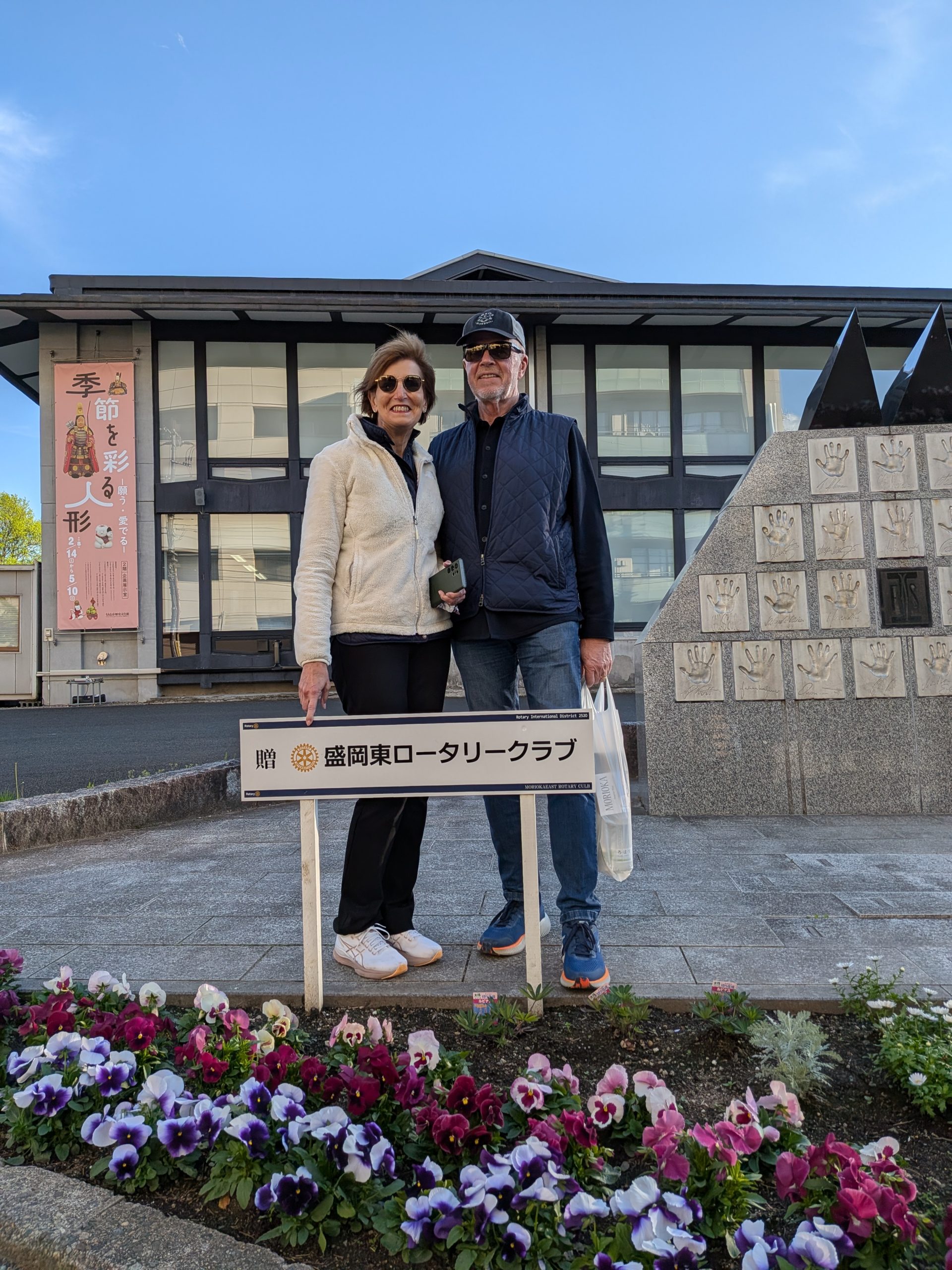
I gave a brief explanation of the yabusame (horseback archery) at Morioka Hachimangu Shrine. I feel I want to work harder so I can give a more in-depth explanation of Morioka Hachimangu Shrine. Next, after the shrine, our next destination was the Suzuki Morihisa Studio. Unfortunately, the shop was closed. Here, in 1974 the 14th-generation Suzuki Morihisa was designated as an Intangible Cultural Property. It has 400 years of history. Next we visited the Iwate Bank Red Brick Building, but this too was closed and we could not go inside. "The Iwate Bank Red Brick Building is the former Iwate Bank head office built in 1911, designed by Kingo Tatsuno, who also designed Tokyo Station." And right next to it there is a rose garden, and in summer colorful, beautiful roses soothe us. Then we headed to the Morioka History and Culture Museum. Once again it was closed. However, at the entrance, well-tended violets comforted us. There was a signboard at the violet flower bed that read "~ Rotary Club," and one of the guests spoke to me, saying, "We met at a Rotary Club in North America." What is strange is that the signboard had no English at all and was written only in Japanese, so how did they know it was a Rotary Club? Here too, I took a photo of the guests. That morning, after arriving at JR Morioka Station, I had stopped by the tourist information office and confirmed the closing times of the Suzuki Morihisa Studio, the Iwate Bank Red Brick Building, and the Morioka History and Culture Museum, but they had not said a single word about them being closed. Even though two staff members had said the Morioka History and Culture Museum closes at 19:00…… I felt very frustrated. I think the guests probably felt the same way. What should I check, and where?
Regaining my composure, we entered Morioka Castle Ruins Park. There were two large plane trees. There's a song that goes "♬ This tree, what tree, the tree that catches your attention, a tree you've never seen before ♬," and every time I come to this park that song plays in my head. Plane trees are apparently called "plane tree." Leaving the "plane trees" behind, we headed toward where the former castle keep once stood. Just as we started up a slightly steep slope, one of the guests began to feel a little unwell, and after discussing it, one of them returned to the hotel first alone. The other continued the walk around the park. After it became just the two of us, I was told that the guest who returned was undergoing chemotherapy and sometimes feels unwell. Since a member of my own family has also had a similar experience, I told the guest that it's important not to overdo it. After Iwate Park, we prayed at Sakurayama Shrine. Here, I explained the origin of the Eboshi-iwa rock in the precincts and the mukai-zuru (facing cranes), which is the symbol of the Nanbu clan. I think the guest was understandably becoming worried about the other guest. Leaving Sakurayama Shrine, we walked back to the hotel in front of the station, and the tour came to an end. Since the guest was worried, we ended the tour a little early.
Click here for more details: Morioka Customized Half-Day Tour with Licensed Local Guide
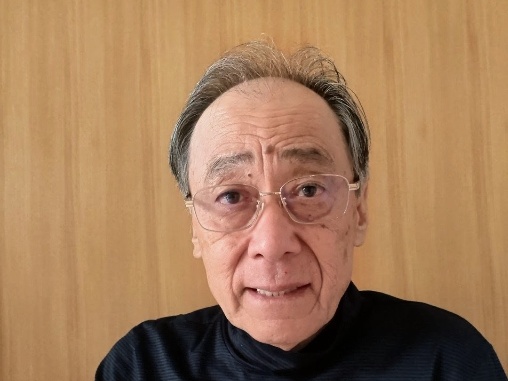
Hello and welcome! If you’re an inbound guest, I’d like to extend a warm greeting to you. I hope you have a pleasant stay in our beautiful city. If there’s anything you need, feel free to ask – I’m here to assist! My name’s Toshiya Ozawa. Please call me Toshi. I have 25 years’ experience as National Government Licensed Guide Interpreter guiding in English. Presently, I live in Ohsyu-shi, Iwate-ken where the Major Baseball player Shohei Ohtani was born and bred. The followings are the places where I attended as a tour guide for your reference. [Guide experience] Nara’s UNESCO World Heritage sites. Japan’s largest lake Lake biwa and Azuchi-jyo Ruins in Shiga prefecture. Historic Monuments of Ancient Nara:Horyu-ji, Nara Park, Todaiji Temple. Former Site of the Imperial Palace at Heijokyo, Todaiji Temple, along with Kasugataisha Shrine and the Kasugayama Primeval Forest. Koyasan (Shukubo Rengejo-in) shukubo literally means sleeping with the monks. Yagyu-no-sato (or the swordsman village of Yagyu), known as the home of Yagyu Shinkage-Ryu (traditional style of swordsmanship), is located in Northeast of Nara-city with rich natural environment. In Kyoto: JR Kyoto Station, The Golden Pavilion, World Heritage Site Former Imperial Villa Nijo-jo Castle, Ryoan-ji Temple, Nanzen-ji Temple. In Mie Prefecture: Ise Shrine, Wadakin (Japan’s one of the best wagyu-beef restaurant, Matsusaka-shi). In Shiga prefecture: Mother Lake Lake Biwa, Azuchi Castle ruins.
In Tokyo: Meiji shrine, Odaiba, Imperial Palace, Takeshita Street in Harajyuku, Akihabara (the otaku mecca and has its own unique atmosphere), Asakusa Kannon (Bodhisattva of Mercy) Sensoji Temple, and Tokyo Tower.
In Shizuoka Prefecture: Mt. Fuji.
In Aichi prefecture: 1. Atsuta Shrine 2. Toyota Commemorative Museum of Industry and Technology 3. Inuyama Castle (Inuyama-shi) 4. Ohsu Shopping District 5. Konomiya Naked Festival (Inazawa-shi) 6.Tagata Jinja Shrine’s Honen Festival 7. Toyota Automobile Museum (Nagakute-shi) 8. Thousand Rice Paddies of Yotsuya (Yotsuya Senmaida) (Shinshiro-shi) 9. Asuke/Korankei (Toyota-shi Asuke-cho) 10. Chubu Centrair International Airport 11. Rest Stop (Highway Oasis Kariya, Donguri-no-sato Inabu)
10 years’ experience in a trading operations position and 7 years’ experience as an Exporting Manager and 5 years’ experience as a Domestic Sales Representative: All of the experiences above included contacts with respective customers both externally and internally.
I spent more than 2 years in the United States and Canada. Attended Kibbutz Hebrew class for six months in Israel.
Aug1991– present MASPRO DENKOH Corporation, Aichi prefecture in Japan.
Sales presentative/Exporting Manager “Export of TV reception and related equipment to Hong Kong, Malaysia and Thailand”
Negotiated prices and specifications with the makers “Drafting and arranging the needed documentations requested by custom houses”
OEM (Original Equipment Manufacturer) supply of CS antennas to SONY Corporation
OEM supply of U.S. DirecTV Satellite Dish Antenna Dual LNB to Sony Corporation
Attended the customers from overseas when they came to the head office
Interpreter, translator to the C.E.O. (engaged in direct report to the company president)
Import of invaluable western style paintings, Japanese potteries and porcelains
Export of receiver and transmitter for Qualcomm Omni TRACS Ku-band satellite fleet tracking system in the U.S.
Export of CATV Tap-off for Time Warner Cable in the U.S. OEM supply of ETC In-Vehicle Unit in Singapore to Mitsubishi Heavy Industries.
Apr. 1989–March 1991, employed by ESPO Corporation in Tokyo, Japan. Manager of secretarial section to the C.E.O
Interpreter, translator to the C.E.O “Assisted M&A transactions”
Formula 1 ESPO-LARROUSSE Team negotiation and interpreter. Was in charge of training new staff (26 university graduates )
Supervised new graduate recruitment activities as a part of training new staff and successfully recruited 40 prospective employees
Apr 1976 – March 1991 Nissait English School in Tokyo, Japan
1989 Director of Nissait English School “Management of English schools in Tokyo and Saitama prefecture”
Instructor: Taught English conversation more than 1000 students “Was in charge of training new instructors (12 vocational college graduates )”
Supervised new student recruitment activities as a part of training new instructors and successfully recruited 420 students at ten different schools for 5 years
Was in charge of International Exchange program
Chaperoned and supervised 160 Japanese youth delegates for cultural immersion homestays in the U.S.A. and Canada.
Education: In 1976, Completed the curriculum at a university, received a degree of B.A. in Economics, Aoyama Gakuin University, in Tokyo.
Windows MS Word, Excel, PowerPoint
Certified as a National Licensed English-Speaking Tour Guide in 2009 (License No. Aichi EN00307)
Passed Grade 1 of the EIKEN Test in Practical English Proficiency in 1989.
Apr 29, 2026
447dags
Tripadvisor review: Morioka Full-Day Private Tour with Government-Licensed Guide
Full service tour of Morioka
Full service tour with Toshiya Ozawa, who…
Apr 29, 2026
447dags
Tripadvisor review: Morioka Full-Day Private Tour with Government-Licensed Guide
Full service tour of Morioka
Full service tour with Toshiya Ozawa, who speaks very good english and had communicated with us in advance. He met us uppon arrival at the station, escorted us to our hotel, gave us reading material about Morioka as well as a welcome gift and an hours rest before our tour started. Visited sake brewery with tasting, shinto temple and castle mountain and did a walkabout before being escorted back to our hotel. Due to spring holliday many places were closed, but Toshiya made the best out of it.
Apr 2, 2025
Calder_L
Best way to spend the afternoon in Morioka.
Viator review: Morioka Half-Day Private Tour with Government-Licensed Guide
Toshisan was an amazing…
Apr 2, 2025
Calder_L
Best way to spend the afternoon in Morioka.
Viator review: Morioka Half-Day Private Tour with Government-Licensed Guide
Toshisan was an amazing guide. He showed me all around Morioka. The castle ruins, the old red brick Iwate Bank building, a sake tasting, Takematsu Park, and Takematsu Jinja Shrine.
Be prepared to walk a lot and you’ll have an amazing experience discovering Morioka.
Jun 14, 2024
Pelle S
Great insights on Morioka!
Tripadvisor review: Morioka Full-Day Private Tour with Government-Licensed Guide
Toshi-san is a very knowledable guide with…
Jun 14, 2024
Pelle S
Great insights on Morioka!
Tripadvisor review: Morioka Full-Day Private Tour with Government-Licensed Guide
Toshi-san is a very knowledable guide with insights into many varied subjects. Before the tour we got to really good opportunity to fine tune the walking tours itinerary. And after the tour we got an good collection of information for our continued stay in Morioka. Very much appreciated!
May 30, 2024
Juan Ignacio G
Experiencia recomendable!
Tripadvisor review: Hiraizumi Full-Day Private Trip with Government-Licensed Guide
Toshi nos acompañó con mucho entusiasmo a recorrer…
May 30, 2024
Juan Ignacio G
Experiencia recomendable!
Tripadvisor review: Hiraizumi Full-Day Private Trip with Government-Licensed Guide
Toshi nos acompañó con mucho entusiasmo a recorrer los puntos más importantes e icónicos de hirazumi. Fue muy amable en todo el recorrido, nos recomendó opciones de almuerzo, y hasta nos trajo algunas guías en audio en español para poder entender más. Muy recomendable!