
Hiraizumi Customized Half-Day Tour — Guide Koh
April, 2026
This is a private guided tour report by Japan Guide Agency (JGA Inc.), a network of 1,000+ government-licensed, English-speaking local guides across all 47 prefectures of Japan.
Tour Itinerary
- Departure from Hiraizumi Station (on foot) 10:30 Arrival at Motsuji Temple 10:50 Departure from Motsuji Temple 12:00 Arrival at Chusonji Temple 12:15 Departure from Chusonji Temple 14:15 Arrival at Hiraizumi Station and dismissal 14:30
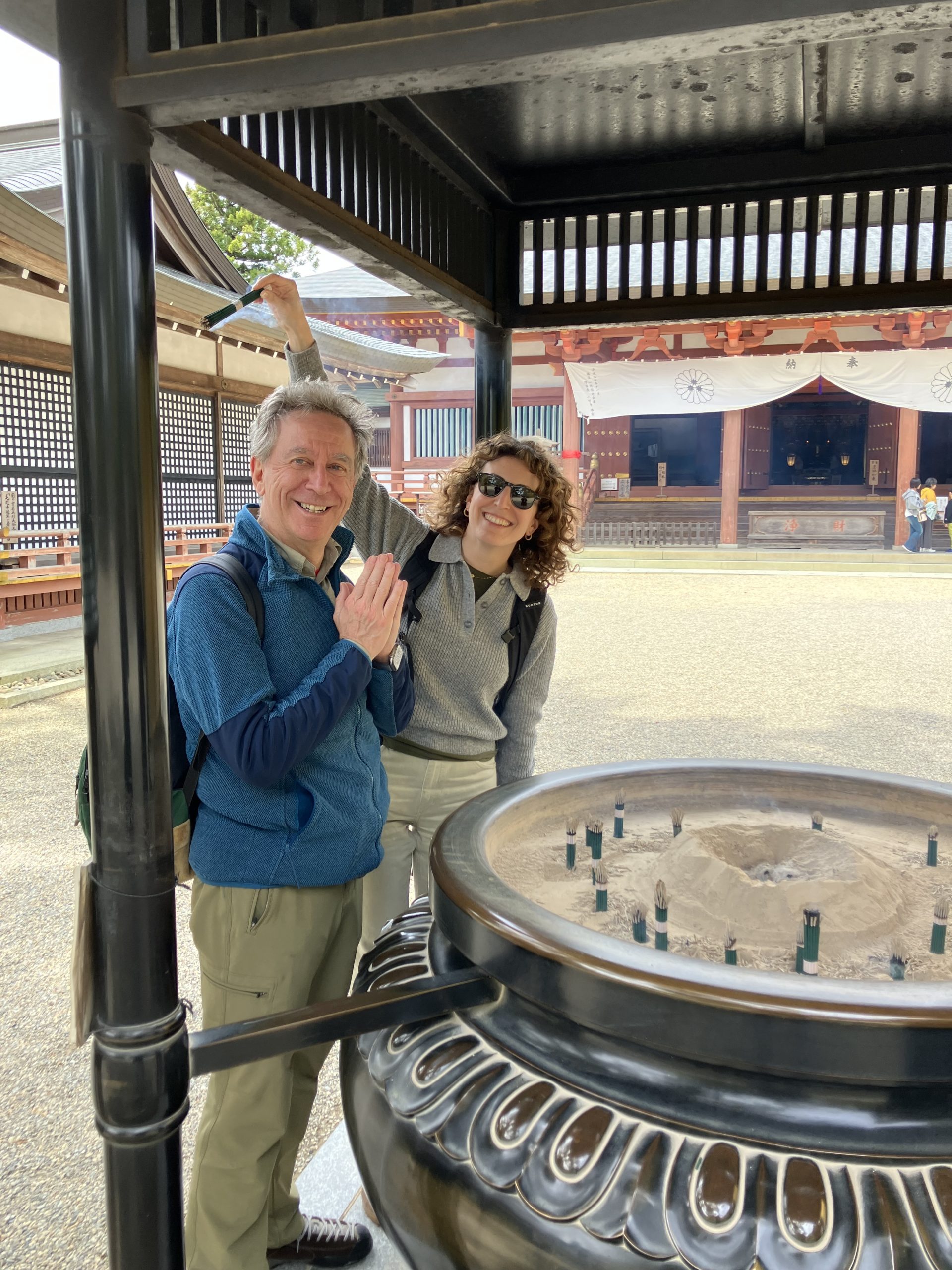
What Is a 4-Hour Private Tour of Hiraizumi Like? A Licensed Guide's Report
The guests were a family from Europe. Since they had come to Hiraizumi without seeing Kyoto or Nara, they found the temples and shrines and their features quite novel. Covering both Chuson-ji and Motsu-ji in Hiraizumi in four hours turned out to be a fairly relaxed tour. Normally we would stop somewhere for lunch, but the guests felt it would be a waste of time, so they limited themselves to eating snacks while walking. The "Spring Fujiwara Festival" was set to begin the next day (May 1), and perhaps because it was the day before, neither temple's grounds were particularly crowded. We used a taxi to travel from Motsu-ji to Chuson-ji, and then from Chuson-ji to Hiraizumi Station. After the tour ended, since they had come all the way to Iwate, the guests said they wanted to see Genbikei Gorge in Ichinoseki City. As traveling by chartered taxi was convenient and reasonably priced, I arranged a taxi.
Click here for more details: Hiraizumi Customized Half-Day Tour with Licensed Local Guide
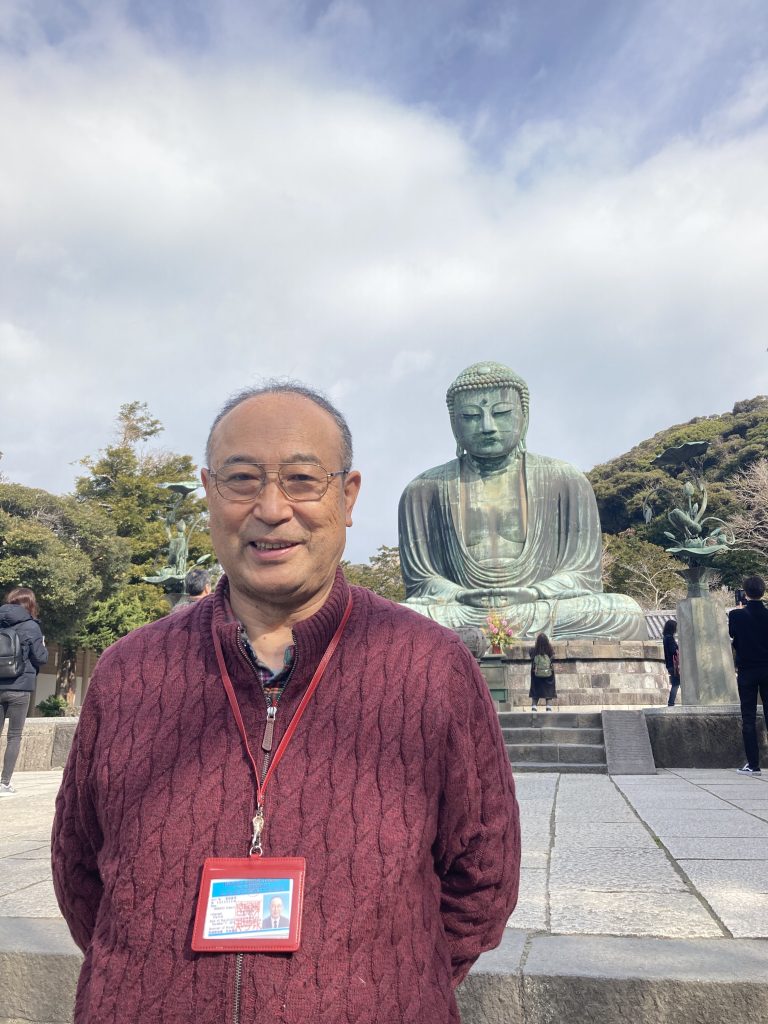
Hello. My name is Kohmin Iwabuchi, but please call me KOH for short. I have been working as a tour guide for more than 10 years. So far, I have visited hundreds of scenic spots, but there is one place I will not go. Guess what is it? That’s the top of Mt. Fuji, the highest mountain in Japan. I can climb the mountain, but it’s hard for me to guide people while climbing.
I am interested in traditional sports in Japan, particularly sumo wrestling. Sumo is time honored sports. We can trace its origin back to some thousand years ago. First it was played as an entertainment in a Shinto shrine. The rule of sumo is simple. The match is played by two participants in a ring. If any parts of the body of one of the participants except the sole touches the ground or he was pushed out of the ring, he will be defeated.
The appearance of sumo wrestlers is very traditional, because their samurai like hairstyle “chonmage” originates from feudal ages.
Unlike boxing and wrestling, there are no weight restrictions or classes, meaning that your opponent can be many times your own size. As a result, weight gain is an essential part of sumo training. Personally my weight is about 200 pounds which enables me to be a sumo wrestler.
Sumo wrestlers live in a sumo stable. It’s the place where they eat, drink, train and sleep together. In greater Tokyo area, there are about 40 sumo stables, many of which are located in Ryogoku area. A small number of stables welcome people to come and see the morning practice. I hope some day I can visit there with you.
Jul 18, 2024
OnAir13534982348
Tour curated to my family’s interests!
Tripadvisor review: Takachiho Gorge Half-Day Private Trip with Government-Licensed Guide
Koh contacted me ahead of…
Jul 18, 2024
OnAir13534982348
Tour curated to my family’s interests!
Tripadvisor review: Takachiho Gorge Half-Day Private Trip with Government-Licensed Guide
Koh contacted me ahead of time and curated the tour according to my family’s interests – culture, temples and food. We wanted to taste Sendai’s specialties, and would have missed out on beef tongue and grilled squid had it not been for Koh! He also hired a car for us when I expressed that funds weren’t an issue for us. We had a wonderful time and highly recommend 10/10.