
This is a private guided tour report by Japan Guide Agency (JGA Inc.), a network of 1,000+ government-licensed, English-speaking local guides across all 47 prefectures of Japan. Not affiliated with the Japan Guide Association.
Tour Itinerary
- 10:30 Meet up @ In front of Himeji Castle
- 10:45 @ Koko-en Garden
- 12:00 @ Himeji Castle
- 14:15 @ Egret Himeji Rooftop
- 14:30 @ Sosha Shrine
- 14:45 Disband at Himeji Miyuki-dori
Can You Do a Private Himeji Castle Tour from Osaka? A Licensed Guide's Report
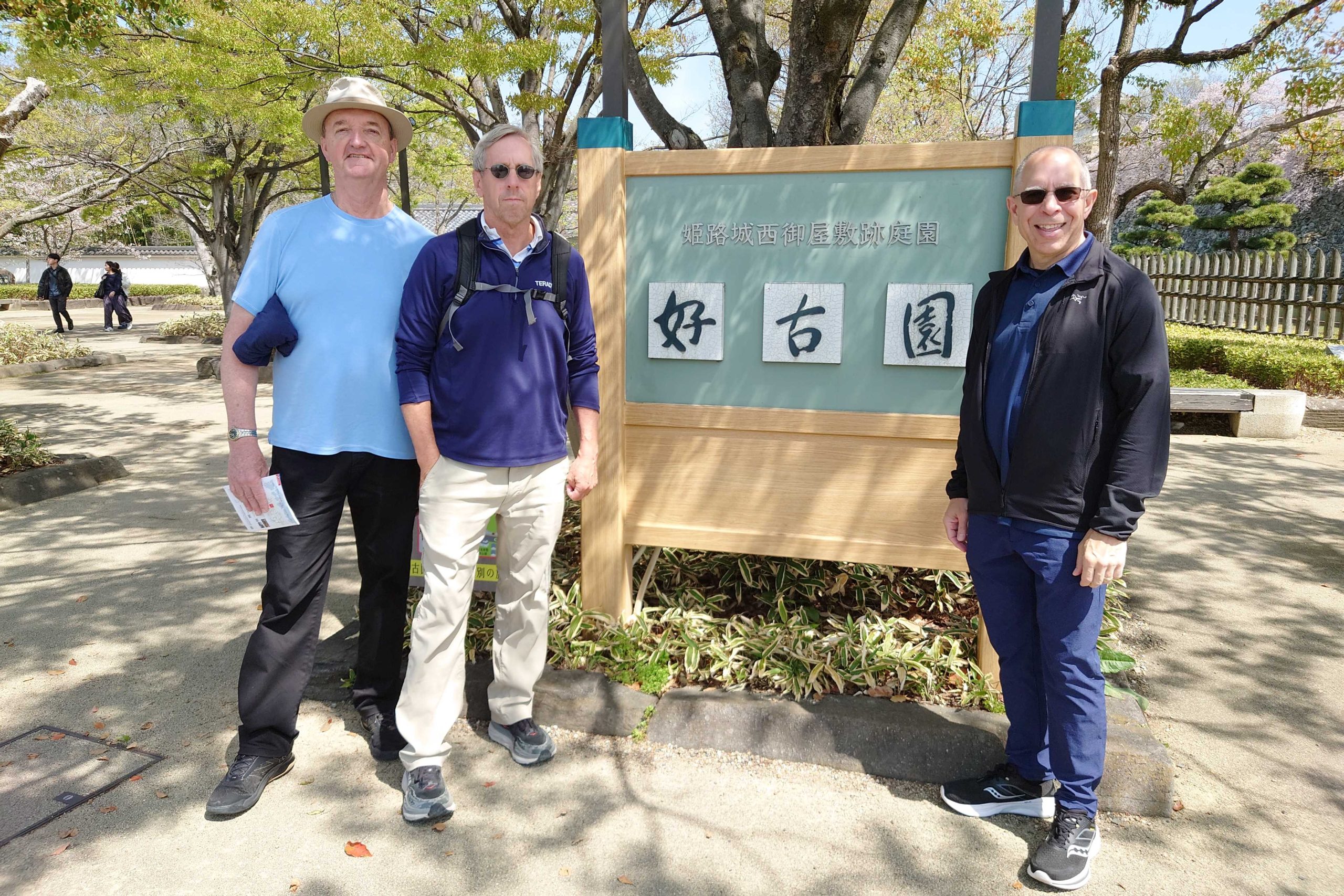
The guests were a group visiting from North America. When they did not appear at the meeting time, I contacted them via a messaging app, and they told me they had taken the wrong train from Osaka and would be a little late. When I contacted them again, they said they were waiting near the entrance gate of Himeji Castle rather than at the Himeji Castle exit of JR Himeji Station, which we had confirmed. As a result, the tour started about 30 minutes late, but after that everything went smoothly. One of the guests had previously spent time in Japan and showed a strong interest in the country, asking many quite in-depth questions. All of the guests seemed to have a keen interest in plants, and they appeared very satisfied with the visit to Koko-en Garden. At Himeji Castle, the cherry blossoms had mostly passed their peak, but they were still very beautiful to admire. At Sangokubori, the guests were delighted to see a white heron, which is said to be the origin of Himeji Castle's alternative name, "White Heron," a sight that is rarely seen. (They were able to see it again on the way back.) They also appeared very satisfied with the panoramic view of Himeji Castle from the rooftop of Egret Himeji. At the last stop, "Soja Shrine," a wedding ceremony happened to be taking place, and the guests watched it with great interest. (As a guide, it was also my first time seeing a wedding held there.) After the tour, the guests wanted to eat "Kobe beef" in Kobe, so I recommended a couple of restaurants. They also wanted to have a light meal before boarding the train, so we parted ways at "Miyuki-dori."
Note) For the first time, a misunderstanding about the meeting place occurred as described above. What had been confirmed was the "Himeji Castle exit" of JR Himeji Station, but on the day itself the guests mistook it for the entrance to Himeji Castle itself. I have never experienced a situation like this before, but I can certainly understand that it could be confusing for foreign visitors. In the future, I would like to confirm that the meeting point is the "Himeji Station North Exit (Himeji Castle exit)," emphasizing that it is the "station."
Click here for more details: Himeji Castle Half-Day Customized Tour with Licensed Guide
Dear my guests,
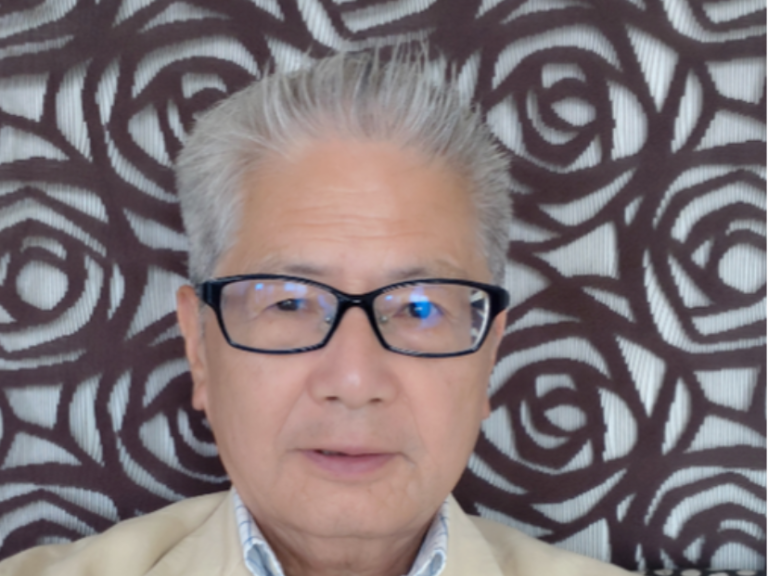
This is (Mr.) Yama, greeting from Kobe, Japan.
I would like to warmly welcome you to Japan this time. I am from the city of Kobe, which is of course, well-known for very tasty Kobe Beef . You can taste
real genuine Kobe Beef here. Kobe is also called “Home of Japanese Sake” with lots of Sake breweries, and I recommend you would visit those breweries
if you have any interest in Japanese Sake as well as one aspect of Japanese cultures. Of course, you can have tastings of various kinds of Sake there.
Whenever during the tour, I always try to make it safe, pleasant and comfortable for all of the guests, which is my first priority. I am very much confident
that you can have a pleasant and unforgettable experience in Japan. Just tell me about your preference; what you would like to like to see, have, know
and eat and so on. Particularly, I hold the license for cooking qualified by the government here and maybe, I can reply you for questions related to the
foods here. In this respect, I strongly recommend you would try not only famous Japanese cuisine such as Sushi, Tempura or Suki-yaki but some
Japanese traditional local foods, like Tako-yaki, Okonomi-yaki and Kushkatsu. They are sometimes called the soul foods of Japan. Here is the brief
explanation for these three foods.
1) Tako-yaki
Tako-yaki is a snack filled with pieces of octopus in a batter of flour , egg and soup stock. You can call them octopus dumplings or balls. “Tako” means
octopus and “yaki” means grilled or broiled.
2) Okonomi-yaki
This word Okonomi-yaki means “cook just as you like” and you can use whatever you like as toppings, such as beef, pork, shrimp, squid and octopus.
Okonomi-yaki is round shape and just like pancakes or pizza in shape mainly made from egg, flour and water.
3) Kushi-katsu
Kushi-katsu is skewered cutlet or deep-fried foods on a stick. “Kushi” means skewer and “katsu” means cutlet. Various kinds of foods are used for
ingredients such as beef, pork, chicken, shrimp, squid, octopus and lots of kinds of vegetables.
Actually, the western Japan including Osaka, Kobe and Himeji is called as “Home of such local soul foods”. You should give it a try and I am sure
that you like them very much.
I sincerely hope that I can be your tour guide this time in Kobe, Osaka and Himeji. If my guests said to me after the tour, “I have had a very good
and pleasant time with you today. I hope I can come here again and name you as our guide”, which is my great pleasure. Moreover, I would be
great honored if they say “I like Japan now thanks to you”.
Looking forward to meeting you soon here.
Doomo Arigato Gozaimasu!
Yama
Jul 25, 2026
Hdixjdixj
Tripadvisor review: Osaka Local Food & Culture Tour in 1 Day, Licensed Guide
Amazing Food Tour through Osaka
We were taken…
Jul 25, 2026
Hdixjdixj
Tripadvisor review: Osaka Local Food & Culture Tour in 1 Day, Licensed Guide
Amazing Food Tour through Osaka
We were taken care of by Yama-San. We had an amazing time and probably ate the best Tuna ever in our lives. Yama-san really knew where to take us and also gave us some historical backgrounds in general. We can only recommend this Tour as a 5 Star tour. All the places he took us too where amazing and the food so super delicious.
Jul 20, 2026
Eric_W
Viator review: Himeji Castle & Koko-en in 1 Day Tour with Licensed Guide
Castle journey worth your time!
Our tour with…
Jul 20, 2026
Eric_W
Viator review: Himeji Castle & Koko-en in 1 Day Tour with Licensed Guide
Castle journey worth your time!
Our tour with Mr. Yamashita was absolutely wonderful from start to finish! He was incredibly knowledgeable, friendly and engaging and he shared so much fascinating history and information throughout the tour. His passion for Himeji Castle and the gardens really showed and he made the experience both educational and fun while taking the time to answer all of our questions. We thoroughly enjoyed our time with Mr. Yamashita and would highly recommend his tour to anyone looking for a memorable and informative experience.
Jul 13, 2026
Diane_B
Viator review: Kobe Customized Private Tour in 1 Day with Licensed Guide
Our tour guide Yama was amazing!!
Our tour guide…
Jul 13, 2026
Diane_B
Viator review: Kobe Customized Private Tour in 1 Day with Licensed Guide
Our tour guide Yama was amazing!!
Our tour guide Yama was simply fantastic – knowledgeable, friendly, and provided impeccable service. Many weeks before our tour, Yama reached out to help us plan and customize our itinerary with him. He was easy to find at our agreed upon meeting location and seamlessly coordinated our transportation around Kobe. We had wonderful visits to Mt Rokko via the cable car, Nunobiki Herb Gardens (Shin-Kobe, using the ropeway), Kitano Ijinkan Street, and the Sannomiya area. At the end of the tour, we felt as if we were saying goodbye to a dear friend. I cannot recommend him highly enough!
Jul 4, 2026
Navigator661725
Tripadvisor review: Osaka 4hr Private Tour with Government-Licensed Guide
A wonderful time!
We absolutely loved this tour. Yama was attentive, was…
Jul 4, 2026
Navigator661725
Tripadvisor review: Osaka 4hr Private Tour with Government-Licensed Guide
A wonderful time!
We absolutely loved this tour. Yama was attentive, was filled with interesting facts, and he also took us a few areas that were not as full of tourists. He seemed to enjoy his work which made it really fun for us. Absolutely a kind and knowledgeable guide, I would highly recommend him to anyone visiting Osaka for the first time….