
This is a private guided tour report by Japan Guide Agency (JGA Inc.), a network of 1,000+ government-licensed, English-speaking local guides across all 47 prefectures of Japan.
Tour Itinerary
- 09:00 Beppu Wharf
- 09:00-09:15 Travel to Takasakiyama Natural Zoological Garden (taxi)
- 09:15-10:30 Takasakiyama Natural Zoological Garden
- 10:30-10:45 Travel to Umi Jigoku (taxi)
- 10:45-11:20 Umi Jigoku
- 11:20-11:30 Travel to Jigoku Mushi Kobo (on foot)
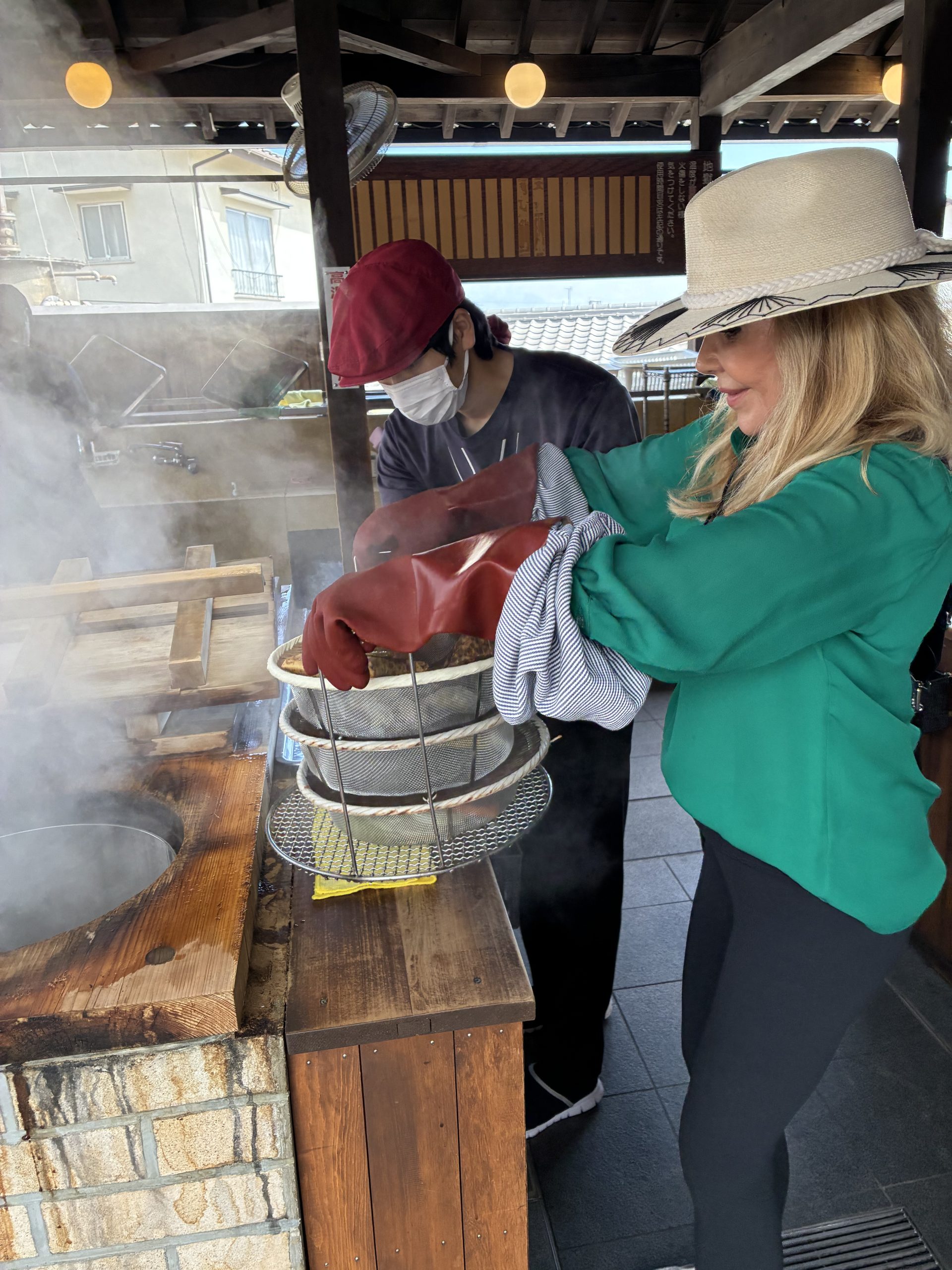
- 11:30-12:20 Jigoku Mushi cooking experience
- 12:20-12:55 Exploring the Kannawa district (Yukemuri Observatory, viewing the bamboo hot spring cooling device)
- 12:55 Travel to Beppu Wharf (taxi)
What Is a Private Beppu Day Tour Like? A Licensed Guide's Report on Takasakiyama Monkeys and Hell Steam Cooking
The guests were visitors from North America. According to the original plan, we were going to visit Takasakiyama around midday, but on the morning of the tour I received information that monkeys had appeared, so I changed the schedule and headed to Takasakiyama first. Luckily, a large number of monkeys had come down from the mountain, and the guests were very pleased to observe wild monkeys up close at the feeding ground. On top of that, a staff member took photos from an angle that ordinary visitors cannot access, so the guests were able to get pictures together with the wild monkeys and were delighted, saying it would be a wonderful memory. They were also impressed by Umi Jigoku. At the Jigoku Mushi Kobo (Hell Steam Cooking workshop), they showed great interest in the traditional cooking method and enjoyed their meal, saying it was delicious. After that, we strolled through the Kannawa district and let them experience the distinctive atmosphere of the area. They were also intrigued by the simple bamboo cooling devices used to cool down the very hot spring water.
There was one thing I felt I needed to consider, which was planning the visit to Takasakiyama. I included Takasakiyama in the plan at the guests' request, but autumn is the season when wild monkeys can find plenty of food in the mountains. It had become a season in which the times the monkeys come down from the mountain to the feeding ground are limited. From about a week beforehand, I checked the monkeys' movements every day, and on the day before the tour there were zero monkeys after 10:00. I was anxious right up until the morning of the tour. It was fortunate that we were able to observe many wild monkeys on the day. In the future, when including Takasakiyama in a course, I plan to inform guests in advance that there may be days when the monkeys do not appear, and to decide on alternative candidate destinations beforehand.
Click here for more details: Beppu Customized Half-Day Tour with Licensed Local Guide
Hallo, my name is Chiharu Horigome. I am a national government-licensed guide interpreter. I was born in Beppu City, Oita Prefecture, and living in Kitakyushu City, Fukuoka Prefecture. I lived for 42 years in Chiba City until April 2023, during that time I worked as a volunteer guide for Narita Airport transit tours. I studied chemistry at university and have over 20 years of experience as a chemical patent translator, so I can also assist with factory tours. My specialty is Japanese culture, especially the tea ceremony, which I have been familiar with since I was a child. In addition, I have a license for kimono dressing. I hope people from other countries feel authentic Japanese culture. I can also help them understand hot springs and sake, including chemical explanations. I am happy to assist you during our tour. If you have any questions about our tour, feel free to ask. I am glad to answer them to the best of my ability! I am looking forward to seeing you.