
This is a private guided tour report by Japan Guide Agency (JGA Inc.), a network of 1,000+ government-licensed, English-speaking local guides across all 47 prefectures of Japan.
Tour Itinerary
- Depart from Azumaya Honten at 13:00
- 13:30 Morioka Handi-Works Square
- 14:45 Hoonji Temple
- 15:15 Mitsuishi Shrine
- 15:50 Morioka Hachimangu Shrine
- 16:10 Morioka Castle Ruins Park
- 17:00 Tour ends
Tour Itinerary in Detail
Over the course of the day the route took in Morioka Handi-Works Square at 13:30, Hoonji Temple at 14:45, Mitsuishi Shrine at 15:15, Morioka Hachimangu Shrine at 15:50 and Morioka Castle Ruins Park at 16:10.
What Is a Private Car Tour of Morioka Like? A Licensed Guide's Report
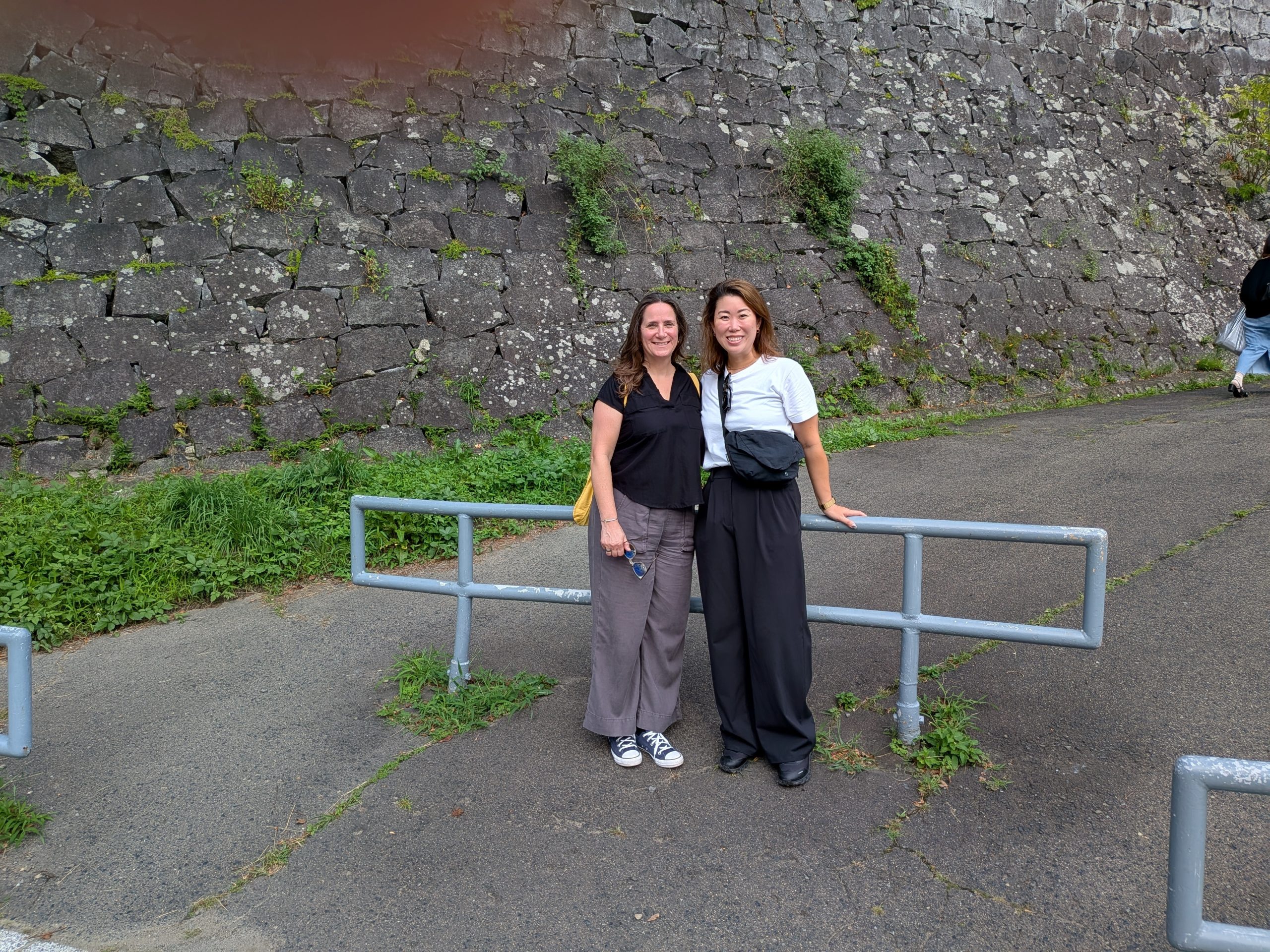
The guests traveled by a car they had arranged, starting with Morioka Handi-Works Square in the suburbs and then visiting temples and castle ruins park in the city center in order. At Morioka Handi-Works Square, the guests seemed intrigued as they watched the Nambu ironware workshops through the windows and asked questions directly to the craftsmen at work. The workshop supervisor explained that iron kettles help supplement iron intake and make water taste smoother, and after drinking water actually boiled in one, the guests showed a look of understanding. At the Nambu senbei workshop, unfortunately a large crowd, including many international visitors, was lined up that day, so the guests gave up on the hands-on baking experience. Instead, they bought Nambu senbei sold in the facility's exhibition and sales room and sampled the taste. The guests seemed convinced by the theory that these crackers originated during the era of the Northern and Southern Courts, when a retainer made them to feed a hungry emperor who had fled from the Southern Court. On the way back into the city, the guests took in the atmosphere from the car windows of the origin of why Kaiun Bridge is called the "bridge of two cries," the Ishiwarizakura stone-splitting cherry tree, the prefectural public hall, the Nakatsu River, and the Iwate Bank Red Brick Building. At Hoonji Temple, the guests viewed the Agyo and Ungyo Nio guardian statues at the mountain gate up close, then went up into the main hall and looked with interest at the wooden fish drum and the principal image. After that, they entered the Rakando hall and stopped to carefully appreciate the expressive rakan statues, including the ones said to be Marco Polo and Kublai Khan and the only female rakan. Entering the zazen meditation hall, the guests seemed to take in the atmosphere of Zen. At Mitsuishi Shrine near Hoonji Temple, which holds the legend that gave rise to the prefectural name of Iwate and the Sansa Odori dance, the guests walked 360 degrees around the three great stones searching for the demon's handprint, but unfortunately could not find it. I followed up with the comparison, "It's like the Loch Ness Monster." At Morioka Hachimangu Shrine, the guests visited Takabai Shrine, which enshrines a deity related to cooking and food, with great interest, and at the Twelve Zodiac Shrine they visited the shrine of their own zodiac sign, then offered two bows, two claps, and one bow at the main hall. Finally, at Morioka Castle Ruins Park, the guests climbed up to the main keep while looking at the stone walls from the Sakakiyama enclosure ruins on the west side, took in the scenery below from the site of the castle tower, and at the pedestal of a nearby statue asked why only the pedestal remained with no statue (it had been requisitioned during the Pacific War). From the second enclosure ruins, they saw part of the view of Mount Iwate and experienced firsthand the tanka poems of Ishikawa Takuboku. The guests climbed the stairs to the right of the shrine hall of Sakurayama Shrine beside the third enclosure ruins and seemed impressed to see up close the massive Eboshi Rock, 6.6 meters high. Since the guests, visiting from North America, were in Morioka for the first time, I believe they were able to experience firsthand the present and past of Morioka by car within the short time available. It was regrettable that they could not experience wanko soba, and I hope they will visit Morioka again.
Click here for more details: Morioka Customized Half-Day Tour with Licensed Local Guide
My name is Hitoshi Ohata. I’ve been an interpreter and guide for about six years since I retired. I live in Takizawa City which is at the foot of Mt. Iwate, the highest mountain in Iwate Prefecture. My hobby is playing table tennis once a week. I’m not a competitive player, I’m just having fun. I also play go, a board game. The main guides are a guide to Hiraizumi’s cultural heritage and a guide to cruise ship tours in Aomori and Iwate Prefecture. I’ve experienced the Great East Japan Earthquake, so I can talk about things like that. I try to convey Japanese culture and society to people overseas in an easy-to-understand way as much as possible.
Jul 19, 2025
Michael_B
Morioka Marathon
Viator review: Morioka Half-Day Private Tour with Government-Licensed Guide
We had a great tour with Hiitoshi. He is from…
Jul 19, 2025
Michael_B
Morioka Marathon
Viator review: Morioka Half-Day Private Tour with Government-Licensed Guide
We had a great tour with Hiitoshi. He is from Morioka and was a wealth of knowledge and
history of this wonderful city. He was spry for his age.
Jun 24, 2025
Matthew_M
Half Day Morioka Tour
Viator review: Morioka Half-Day Private Tour with Government-Licensed Guide
Hitoshi was a pleasure to be with and…
Jun 24, 2025
Matthew_M
Half Day Morioka Tour
Viator review: Morioka Half-Day Private Tour with Government-Licensed Guide
Hitoshi was a pleasure to be with and very informed about Morioka. We got a great sense of
the city from the tour. We would highly recommend him.
Sep 16, 2024
Johannes S
Hitoshi Ohata hat uns eine interessante Führung gegeben. Er hat viel Erfahrung und geht auf individuelle Wünsche ein.
Tripadvisor review:…
Sep 16, 2024
Johannes S
Hitoshi Ohata hat uns eine interessante Führung gegeben. Er hat viel Erfahrung und geht auf individuelle Wünsche ein.
Tripadvisor review: Hiraizumi Full-Day Private Trip with Government-Licensed Guide
Wir hatten eine tolle Führung mit Hitoshi Ohata! Er hat viel Erfahrung und ist sehr
zuvorkommend und freundlich! 👏🏻👏🏻👏🏻👍🏻👍🏻