This is a private guided tour report by Japan Guide Agency (JGA Inc.), a network of 1,000+ government-licensed, English-speaking local guides across all 47 prefectures of Japan.
Tour Itinerary
- 09:10 Meet at JR Hiraizumi Station ⇒ 09:30 Hiraizumi World Heritage Guidance Center ⇒ 10:20 Roadside Station "Hiraizumi" ⇒ 10:50 Kanjizaiō-in ⇒ 10:55 Mōtsū-ji Temple ⇒ 11:35 Chūson-ji Tsukimizaka Entrance ⇒ 11:45 Chūson-ji Higashi Monomi ⇒ 11:55 Sankōzō ⇒ 12:20 Chūson-ji Konjikidō (Golden Hall) ⇒ 12:50 Chūson-ji Kyōdō (Sutra Hall) ⇒ 13:00 Chūson-ji Old Covered Hall ⇒ 13:15 Kanzan-tei (Lunch) ⇒ 13:50 Chūson-ji Main Hall ⇒ 14:05 Chūson-ji Tsukimizaka Entrance ⇒ 14:30 Hiraizumi Station ⇒ 15:17 Tōhoku Main Line (Northbound, from Hiraizumi Station to Ichinoseki Station)
What Is a Private Walking Tour of Hiraizumi's World Heritage Sites Like? A Licensed Guide's Report
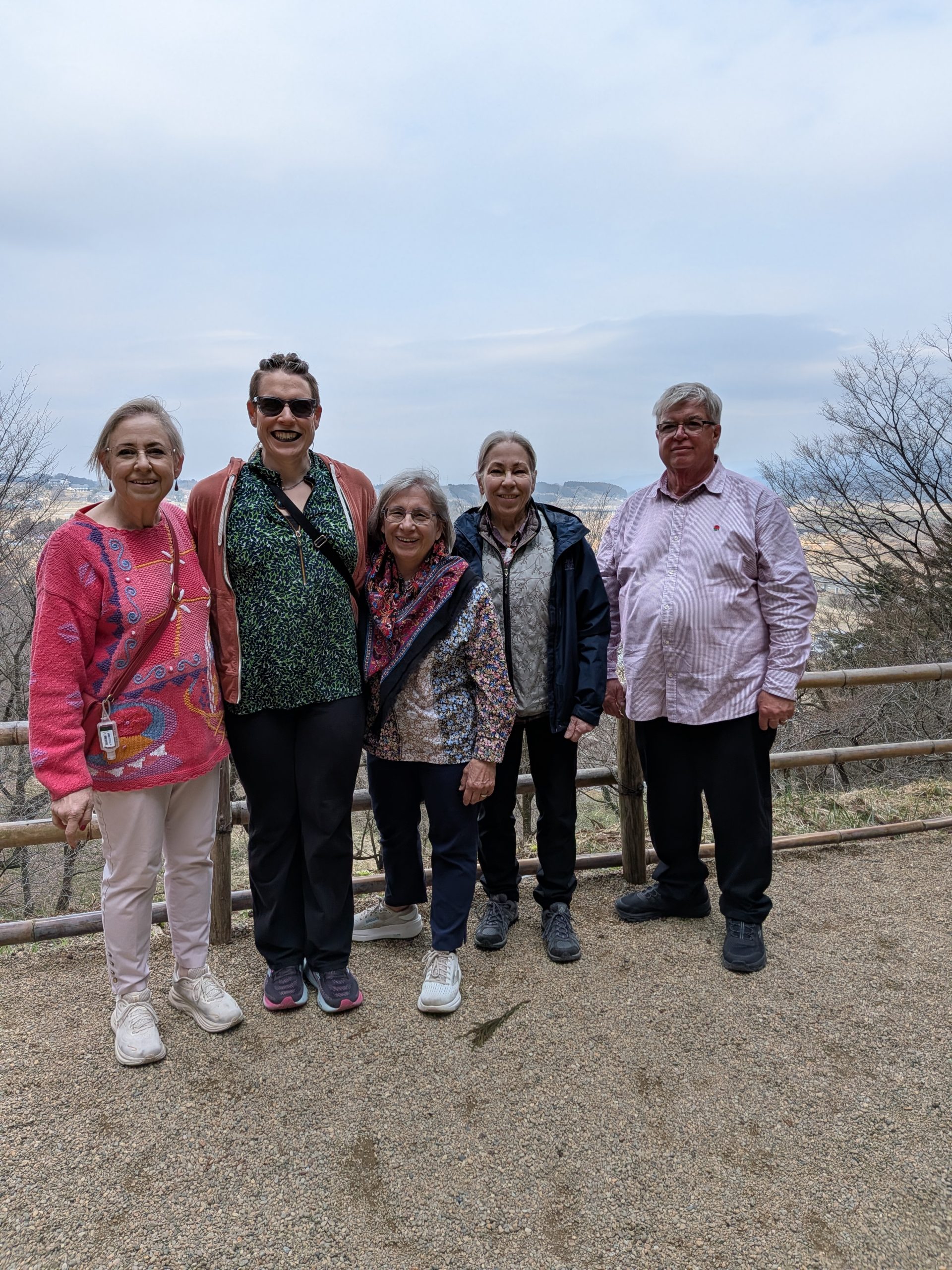
Today's guests were a group of five from North America. Their main purpose for visiting Japan was to attend a wedding in Tokyo. Unfortunately, the newlyweds could not come to Hiraizumi. The group who joined the tour consisted of some of the family members.
At the guests' request, after meeting at Hiraizumi Station, we did not use a car and instead had a walking tour starting from the Hiraizumi World Heritage Guidance Center, then visiting the Muryoko-in Ruins, Michi-no-Eki Hiraizumi, Motsu-ji Temple, the Kanjizaio-in Ruins, and finally Chuson-ji Temple. Between the Kanjizaio-in Ruins and Chuson-ji lies the World Heritage site of Mount Kinkeisan, but since there was a possibility of bears appearing after hibernation, we consulted with the guests and decided to skip Mount Kinkeisan this time.
The meeting time was 10 am, but the guests arrived at Hiraizumi Station around 09:10. After discussing it, we decided to start the tour about an hour earlier and immediately set off toward the Hiraizumi World Heritage Guidance Center. Walking through the town and introducing ourselves to each other, we arrived at the Guidance Center in about ten minutes. After paying the admission fee (¥320), we immediately previewed the history of Hiraizumi through a powerful projection mapping video. The explanation was only in Japanese, but English subtitles appeared in the latter half, so I believe the guests were able to understand it. The Guidance Center has many exhibits, and the Muryoko-in Ruins can also be seen clearly through the windows, so it offers two benefits at once. It took about 40 minutes to look through the Guidance Center.
After this, just across the road is Michi-no-Eki Hiraizumi. Here, at the guests' request, we only made a restroom stop. We then headed straight for Motsu-ji Temple. It takes about 20 minutes on foot (about 1.5 km) to reach Motsu-ji. Along the way, there are many cherry trees, but the cherry buds were still tight, and the cherry blossoms would not bloom for about another week. However, plum blossoms were in bloom here and there, so I believe the guests could feel the arrival of spring in Hiraizumi. While we were chatting about flowers, we arrived at Motsu-ji.
After paying the admission fee and entering the grounds, we immediately saw a plum tree blooming in pink. Also, about 20 meters further in, an apricot tree was in full bloom with beautiful pink flowers. The guests looked at them happily. Motsu-ji is famous for its irises, but at this time of year the stems were still underground, and several local people were working in the iris field. They say you can see many iris flowers in June. On the way to the main hall, there is a stone monument with a haiku by Basho. The guests looked at "Natsukusa ya / tsuwamono-domo ga / yume no ato" and read its English translation, reciting it. Perhaps something resonated with them. At the Nandaimon Gate ruins, I talked about the "White Deer Legend" of Motsu-ji. We visited the main hall and walked around the Pure Land Garden. There were several questions about the artificial hill, the standing stone in the large pond, and the flowing water channels. A full-size model of the standing stone was displayed at the Guidance Center, and it is quite a large stone.
Just before the East Gate ruins of Motsu-ji, there is a bell tower. When I guided at Motsu-ji last time, the guest paid 500 yen and rang the bell, but this time, unfortunately, there was no attendant, so the bell could not be rung, and the guests seemed disappointed. After about 40 minutes strolling in the Pure Land Garden, with Kanjizaio-in on our left, we headed for Chuson-ji. Since it was lunchtime, I consulted the guests about what to do for lunch before reaching Chuson-ji, but their hearts seemed set on Konjikido, the treasure of Hiraizumi, so we decided to head for Chuson-ji first.
Some of the guests walked quite fast. One of the group seemed a little tired, and I became a little worried, so I asked directly, and I was reassured that they knew their own condition and were fine. Naturally, this explained why some of the guests walked so fast. At Hiraizumi Station I had said, "Please feel free to go at your own pace and walk slowly," which now made me feel a little embarrassed.
Now we arrived at the entrance to Chuson-ji's "Tsukimizaka" slope. The 300 meters up to "Higashi-monomi" is a fairly steep uphill climb. Since some of the group were starting to fall behind, I was concerned, so I decided to climb together with them. One of the guests sat down on a bench by the roadside to catch their breath. I asked the three who went ahead to wait at "Higashi-monomi," and the slower group soon arrived safely at "Higashi-monomi" as well. After taking a commemorative photo, we headed straight for Konjikido.
After paying the admission fee at the Sankozo (Treasure Hall), just as we were about to enter, there was an opinion that we should skip the Sankozo and go straight to Konjikido, but I said that the national treasures — the "Joroku Buddha," the "Thousand-Armed Kannon," and the "Konshi Kinji Issaikyo" sutras — were waiting for the guests, so let's go into the Sankozo. The Sankozo is quite popular. It was crowded with visitors viewing the exhibits. It is indeed a treasure house of national treasures.
At last we reached "Konjikido," which the guests had been eagerly awaiting. Unusually, inside Konjikido it was not as crowded as I had expected. Inside Konjikido, an explanatory announcement is played at high volume. Visitors can deeply understand the history of Konjikido and Buddhist culture while listening to the announcement in the hall. Normally the explanation is in Japanese, but when I asked a staff member to play the English announcement, fortunately for us there happened to be almost no Japanese tourists, so they immediately began the English announcement. The guests looked at Konjikido straight on and listened intently to the explanation in English. I truly felt it was good that I had done a preliminary visit a few days earlier.
After viewing "Konjikido," the guests seemed hungry, so we decided to have lunch. Among several restaurant candidates, we chose "Kanzantei," the closest one. After briefly stopping at the "Kyozo" (sutra hall) and the "Oido" along the way, we arrived at "Kanzantei." All five ordered heated buckwheat soba with grated yam. It seemed to be delicious. I think the view through the window was also nice. After the meal, we briefly stopped at the main hall along the way. I explained that it is the most important temple at Chuson-ji, but everyone's mind seemed occupied with returning to Hiraizumi Station soon. It is about 1.5 km from Chuson-ji to Hiraizumi Station, but at the guests' request we returned to Hiraizumi Station by two taxis. Since there was some waiting time before the train, the guests bought snacks at a convenience store and had a snack time.
The tour ended here. The guests boarded the 15:17 Tohoku Main Line to Ichinoseki Station, then transferred to the Shinkansen there and headed for Sendai Station. They planned to go to a department store near Sendai Station to buy souvenirs. It was a very educational day for me.
Click here for more details: Hiraizumi Customized Private Tour in 1 Day with Licensed Guide
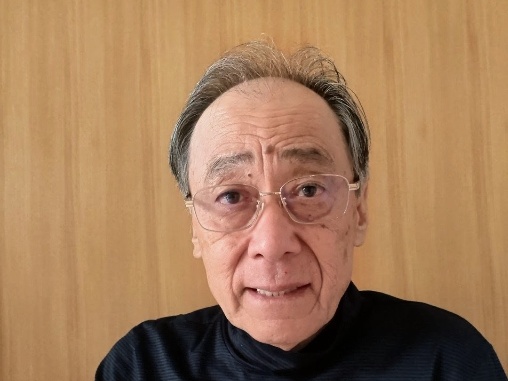
Hello and welcome! If you’re an inbound guest, I’d like to extend a warm greeting to you. I hope you have a pleasant stay in our beautiful city. If there’s anything you need, feel free to ask – I’m here to assist! My name’s Toshiya Ozawa. Please call me Toshi. I have 25 years’ experience as National Government Licensed Guide Interpreter guiding in English. Presently, I live in Ohsyu-shi, Iwate-ken where the Major Baseball player Shohei Ohtani was born and bred. The followings are the places where I attended as a tour guide for your reference. [Guide experience] Nara’s UNESCO World Heritage sites. Japan’s largest lake Lake biwa and Azuchi-jyo Ruins in Shiga prefecture. Historic Monuments of Ancient Nara:Horyu-ji, Nara Park, Todaiji Temple. Former Site of the Imperial Palace at Heijokyo, Todaiji Temple, along with Kasugataisha Shrine and the Kasugayama Primeval Forest. Koyasan (Shukubo Rengejo-in) shukubo literally means sleeping with the monks. Yagyu-no-sato (or the swordsman village of Yagyu), known as the home of Yagyu Shinkage-Ryu (traditional style of swordsmanship), is located in Northeast of Nara-city with rich natural environment. In Kyoto: JR Kyoto Station, The Golden Pavilion, World Heritage Site Former Imperial Villa Nijo-jo Castle, Ryoan-ji Temple, Nanzen-ji Temple. In Mie Prefecture: Ise Shrine, Wadakin (Japan’s one of the best wagyu-beef restaurant, Matsusaka-shi). In Shiga prefecture: Mother Lake Lake Biwa, Azuchi Castle ruins.
In Tokyo: Meiji shrine, Odaiba, Imperial Palace, Takeshita Street in Harajyuku, Akihabara (the otaku mecca and has its own unique atmosphere), Asakusa Kannon (Bodhisattva of Mercy) Sensoji Temple, and Tokyo Tower.
In Shizuoka Prefecture: Mt. Fuji.
In Aichi prefecture: 1. Atsuta Shrine 2. Toyota Commemorative Museum of Industry and Technology 3. Inuyama Castle (Inuyama-shi) 4. Ohsu Shopping District 5. Konomiya Naked Festival (Inazawa-shi) 6.Tagata Jinja Shrine’s Honen Festival 7. Toyota Automobile Museum (Nagakute-shi) 8. Thousand Rice Paddies of Yotsuya (Yotsuya Senmaida) (Shinshiro-shi) 9. Asuke/Korankei (Toyota-shi Asuke-cho) 10. Chubu Centrair International Airport 11. Rest Stop (Highway Oasis Kariya, Donguri-no-sato Inabu)
10 years’ experience in a trading operations position and 7 years’ experience as an Exporting Manager and 5 years’ experience as a Domestic Sales Representative: All of the experiences above included contacts with respective customers both externally and internally.
I spent more than 2 years in the United States and Canada. Attended Kibbutz Hebrew class for six months in Israel.
Aug1991– present MASPRO DENKOH Corporation, Aichi prefecture in Japan.
Sales presentative/Exporting Manager “Export of TV reception and related equipment to Hong Kong, Malaysia and Thailand”
Negotiated prices and specifications with the makers “Drafting and arranging the needed documentations requested by custom houses”
OEM (Original Equipment Manufacturer) supply of CS antennas to SONY Corporation
OEM supply of U.S. DirecTV Satellite Dish Antenna Dual LNB to Sony Corporation
Attended the customers from overseas when they came to the head office
Interpreter, translator to the C.E.O. (engaged in direct report to the company president)
Import of invaluable western style paintings, Japanese potteries and porcelains
Export of receiver and transmitter for Qualcomm Omni TRACS Ku-band satellite fleet tracking system in the U.S.
Export of CATV Tap-off for Time Warner Cable in the U.S. OEM supply of ETC In-Vehicle Unit in Singapore to Mitsubishi Heavy Industries.
Apr. 1989–March 1991, employed by ESPO Corporation in Tokyo, Japan. Manager of secretarial section to the C.E.O
Interpreter, translator to the C.E.O “Assisted M&A transactions”
Formula 1 ESPO-LARROUSSE Team negotiation and interpreter. Was in charge of training new staff (26 university graduates )
Supervised new graduate recruitment activities as a part of training new staff and successfully recruited 40 prospective employees
Apr 1976 – March 1991 Nissait English School in Tokyo, Japan
1989 Director of Nissait English School “Management of English schools in Tokyo and Saitama prefecture”
Instructor: Taught English conversation more than 1000 students “Was in charge of training new instructors (12 vocational college graduates )”
Supervised new student recruitment activities as a part of training new instructors and successfully recruited 420 students at ten different schools for 5 years
Was in charge of International Exchange program
Chaperoned and supervised 160 Japanese youth delegates for cultural immersion homestays in the U.S.A. and Canada.
Education: In 1976, Completed the curriculum at a university, received a degree of B.A. in Economics, Aoyama Gakuin University, in Tokyo.
Windows MS Word, Excel, PowerPoint
Certified as a National Licensed English-Speaking Tour Guide in 2009 (License No. Aichi EN00307)
Passed Grade 1 of the EIKEN Test in Practical English Proficiency in 1989.
Apr 29, 2026
447dags
Tripadvisor review: Morioka Full-Day Private Tour with Government-Licensed Guide
Full service tour of Morioka
Full service tour with Toshiya Ozawa, who…
Apr 29, 2026
447dags
Tripadvisor review: Morioka Full-Day Private Tour with Government-Licensed Guide
Full service tour of Morioka
Full service tour with Toshiya Ozawa, who speaks very good english and had communicated with us in advance. He met us uppon arrival at the station, escorted us to our hotel, gave us reading material about Morioka as well as a welcome gift and an hours rest before our tour started. Visited sake brewery with tasting, shinto temple and castle mountain and did a walkabout before being escorted back to our hotel. Due to spring holliday many places were closed, but Toshiya made the best out of it.
Apr 2, 2025
Calder_L
Best way to spend the afternoon in Morioka.
Viator review: Morioka Half-Day Private Tour with Government-Licensed Guide
Toshisan was an amazing…
Apr 2, 2025
Calder_L
Best way to spend the afternoon in Morioka.
Viator review: Morioka Half-Day Private Tour with Government-Licensed Guide
Toshisan was an amazing guide. He showed me all around Morioka. The castle ruins, the old red brick Iwate Bank building, a sake tasting, Takematsu Park, and Takematsu Jinja Shrine.
Be prepared to walk a lot and you’ll have an amazing experience discovering Morioka.
Jun 14, 2024
Pelle S
Great insights on Morioka!
Tripadvisor review: Morioka Full-Day Private Tour with Government-Licensed Guide
Toshi-san is a very knowledable guide with…
Jun 14, 2024
Pelle S
Great insights on Morioka!
Tripadvisor review: Morioka Full-Day Private Tour with Government-Licensed Guide
Toshi-san is a very knowledable guide with insights into many varied subjects. Before the tour we got to really good opportunity to fine tune the walking tours itinerary. And after the tour we got an good collection of information for our continued stay in Morioka. Very much appreciated!
May 30, 2024
Juan Ignacio G
Experiencia recomendable!
Tripadvisor review: Hiraizumi Full-Day Private Trip with Government-Licensed Guide
Toshi nos acompañó con mucho entusiasmo a recorrer…
May 30, 2024
Juan Ignacio G
Experiencia recomendable!
Tripadvisor review: Hiraizumi Full-Day Private Trip with Government-Licensed Guide
Toshi nos acompañó con mucho entusiasmo a recorrer los puntos más importantes e icónicos de hirazumi. Fue muy amable en todo el recorrido, nos recomendó opciones de almuerzo, y hasta nos trajo algunas guías en audio en español para poder entender más. Muy recomendable!